Why Modern Leaders Are Turning to Predictive Analytics for Compatibility
In the high-stakes world of modern leadership, every major decision—from market expansion to team recruitment—is backed by rigorous data analysis. We live in an era where gut feelings are rarely sufficient; instead, executives rely on predictive modeling, behavioral analytics, and pattern recognition to navigate uncertainty. Interestingly, this culture of precision is beginning to transcend the boardroom. Today, forward-thinking professionals are applying the same analytical rigor to their personal lives, specifically when it comes to long-term partnership compatibility.
The shift is subtle but profound. As leaders learn to value objective insights over assumptions, they are increasingly seeking frameworks that offer structural clarity in personal relationships. This evolution marks a move away from purely reactive dating toward proactive, values-based alignment.
The Convergence of Tradition and Technology
For centuries, ancient systems have provided frameworks for understanding human personality and compatibility. While these systems were traditionally rooted in observational wisdom, the modern digital landscape has fundamentally changed how they are accessed and applied. We are seeing a synthesis where the depth of ancient heritage meets the efficiency of modern software.
Leaders who value strategic planning often find that having an ai astrologer free of bias or emotional noise provides a neutral sounding board for self-reflection. By processing complex variables—often involving thousands of unique data points—these tools allow individuals to identify potential alignment gaps early on. In a professional sense, this is equivalent to stress-testing a business model before a full-scale launch. It provides a baseline of information that helps individuals approach their personal lives with the same methodical care they bring to their careers.
This transition toward digital accessibility is not about replacing human intuition, but rather augmenting it. When you have access to a systematic analysis of compatibility traits, you are better equipped to understand the underlying dynamics of your interactions. This, in turn, allows for more thoughtful and intentional decision-making.
Identifying Patterns for Long-Term Success
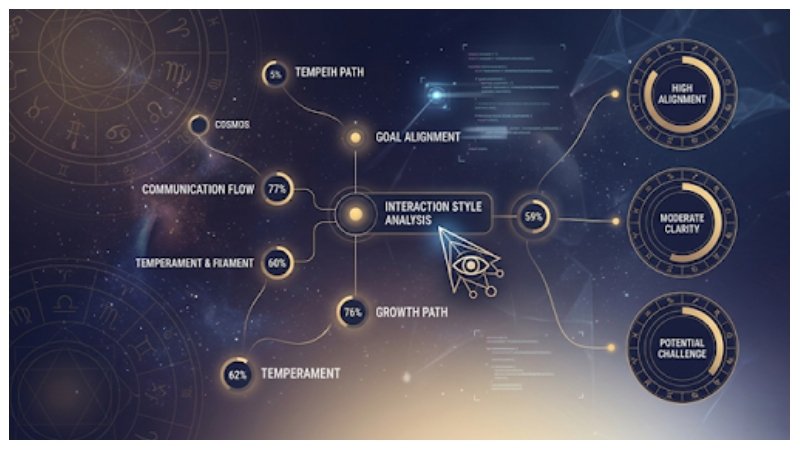
In organizational management, we often use predictive analytics to anticipate future market shifts. When applied to personal compatibility, the methodology is surprisingly similar. It involves looking past superficial traits to identify fundamental value systems, temperament matches, and long-term trajectory alignment.
The complexity of human relationships can often feel overwhelming, yet they are governed by patterns that can be identified and understood. For those who prioritize structured approaches, understanding the technical logic behind these compatibility assessments can be eye-opening. Comprehensive guides, such as online Kundli matching, illustrate how systematic data processing can clarify the nuances of human interaction. By understanding the “how” behind these assessments, users can make more informed choices, ensuring that their personal partnerships are as sustainable and well-considered as their professional endeavors.
When we break down the components of a successful relationship, we find many parallels with successful business operations: clear communication, aligned goals, and a shared vision for the future. By utilizing tools that highlight these areas of alignment, individuals can move forward with a higher degree of confidence.
The Role of Cognitive Efficiency in Leadership
A common challenge for leaders is the sheer volume of information they process daily. Cognitive load is a real factor, and decision fatigue can significantly impact both personal and professional spheres. By offloading some of the heavy lifting of relationship evaluation to analytical frameworks, leaders can preserve their mental energy for their core professional responsibilities.
Astroma.co, a platform that bridges these traditional frameworks with modern interface design, reflects the growing demand for “smart” wellness solutions. Leaders aren’t looking for vague promises; they are looking for actionable insights that help them manage stress and maintain focus. When an individual achieves a sense of balance in their personal life, their capacity for professional leadership naturally expands. By treating personal compatibility as a foundational element of a successful life, high-achieving individuals are essentially optimizing their environment for sustained performance.
Furthermore, these tools provide a structured way to reflect on one’s own tendencies. Just as a 360-degree performance review helps a leader understand their professional blind spots, these analytical frameworks can offer insights into personal interaction styles, allowing for greater growth and self-improvement.
Bridging the Gap: From Theory to Application
It is one thing to acknowledge the value of data, but applying it effectively is where the true challenge lies. For the modern executive, the goal is integration. How do we take these insights and translate them into actionable changes in our daily lives?
The answer lies in consistency. By integrating these analytical tools into a routine, individuals can track progress and observe patterns over time. This longitudinal view is what separates casual interest from genuine strategic development. As we continue to refine these models, the focus remains on ensuring that the data is not only accurate but also practical and applicable to the real-world scenarios that leaders face.
As technology continues to advance, the synergy between traditional wisdom and artificial intelligence will only grow stronger. This evolution allows for a more nuanced understanding of ourselves and our relationships, providing a roadmap for those who prefer to navigate life with a sense of purpose and clarity.
The Future of Personal Strategy
The integration of analytical tools into daily life is not just a passing trend; it is a fundamental shift in how we approach human connection. As we continue to refine these models, the focus will remain on transparency, accuracy, and ease of use. For the modern leader, the ability to synthesize ancient wisdom with contemporary digital insights represents a significant advantage. It allows for a more intentional, data-informed approach to building a life that is as successful at home as it is in the office.
We are entering a phase where personal optimization is no longer a luxury, but a necessity for those managing high-pressure careers. By leveraging the right tools, leaders can create a sustainable balance that supports their long-term ambitions and personal well-being alike. The path forward is one of integration, where ancient wisdom and modern precision work hand-in-hand to build better, more resilient lives.
Frequently Asked Questions
- How does data-driven compatibility differ from traditional approaches?
Traditional approaches often rely solely on intuition, cultural norms, or social context. Data-driven approaches apply systematic frameworks and algorithms to identify long-term patterns and compatibility markers, offering a more granular look at how different personality types interact over time based on historical and cultural variables.
- Can analytical tools replace personal judgment in relationships?
Absolutely not. Analytical tools serve as a support mechanism—a way to gain deeper self-awareness and objective understanding. They should never replace human connection, communication, emotional intelligence, and the lived experience of building a relationship. They are intended to inform judgment, not dictate it.
- Why are leaders increasingly interested in these types of frameworks?
Leaders are professionally trained to value systems that reduce uncertainty and provide actionable data. Finding tools that offer clarity, even in personal matters, aligns with the analytical, results-oriented mindset that drives professional success and personal stability.
- How can I start applying these insights to my own life?
The most effective approach is to explore reputable platforms that provide educational resources and logical frameworks. By starting with a clear understanding of the methodology, you can evaluate how these insights align with your personal values and long-term life goals.
- What is the benefit of integrating ancient systems with modern technology?
Integrating ancient wisdom with modern technology allows users to access age-old principles through efficient, user-friendly digital interfaces. This makes complex, historical knowledge accessible, scalable, and relevant for a fast-paced, modern audience. Click here for more information.