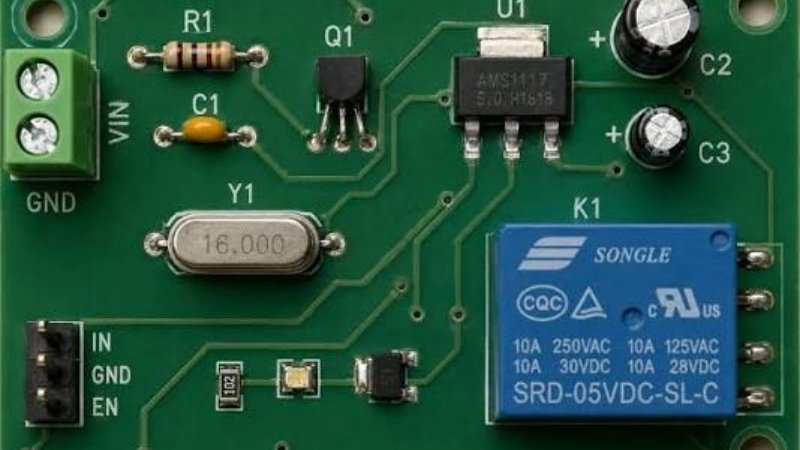
If electrical components in industrial environments are to be effectively maintained over time, a planned approach to cleanliness, inspection, and protection will be essential.
The use of well-chosen electronic cleaner spray from RS can certainly make a vital contribution to the removal of contaminants from sensitive assemblies. However, there will also be certain other crucial aspects to think about and potentially incorporate.
Punishing Industrial Environments Call for Suitable Maintenance Interventions
It’s no secret that industrial electronics often need to operate in highly challenging conditions. Across all manner of manufacturing areas, workshops, warehouses, and processing facilities, components can be exposed to airborne dust, moisture, oils, chemicals, vibration, and temperature fluctuations.
In the absence of appropriate maintenance, contamination can interfere with electrical connections, promote corrosion, or make it trickier to identify emerging faults.
All this underscores the importance of putting in place a maintenance regime that goes beyond the cleaning of components, also extending to routine inspection, environmental controls, and protective measures where appropriate.
3 Key Principles of Effective Electronic Component Maintenance
Here are three things that organisational decision-makers and maintenance teams are particularly advised to prioritise in the process of devising and implementing their maintenance approach:
Control The Environment
It is crucial to maintain suitable temperature and humidity ranges where possible. Enclosures should be used that have appropriate Ingress Protection (IP) ratings and positive-pressure filtration to help limit dust ingress.
In addition, sensitive electronics should be kept away from sources of excessive heat, vibration, or corrosive atmospheres.
Prevent Electrostatic Discharge (ESD)
ESD-safe workstations will need to be implemented, encompassing grounded mats, wrist straps, and ionisers. This will go hand in hand with the training of staff in proper handling techniques and the storage of components in anti-static packaging.
Schedule Inspections
Visual checks, thermal imaging, and functional testing at planned intervals will help ensure any developing areas of concern are identified at the earliest possible stage.
As maintenance personnel undertake such investigations, they should be particularly alert to discolouration, bulging capacitors, loose connectors, corrosion, or dust accumulation.
Cleaning Electronic Components Safely
We have already touched on the reality that maintenance teams cannot depend on cleaning alone as a comprehensive means of maintaining their electronic components.
However, it is also true that cleaning can be one of the most effective maintenance interventions when carried out to the highest standards.
Before cleaning starts, equipment should always be powered down and isolated. It should then be allowed to cool, followed by these steps:
Use Dry Methods First
Loose dust can be removed with the use of compressed air or soft anti-static brushes. It is important to avoid using high-pressure air, given the risk this presents of forcing particles deeper into assemblies.
Turn To Solvent and Specialised Cleaners Where Appropriate
With regard to flux residues, oils, or stubborn contamination, it is important to select electronics-grade cleaners that can be trusted to evaporate quickly and leave no residue.
Isopropyl alcohol (IPA) is commonly used for such purposes, although care should be taken to ensure suitable purity. Specialised formulations often deliver better results than IPA when it comes to tackling industrial grime.
Think About Applying Protective Coatings
After printed circuit boards (PCBs) have been cleaned and thoroughly dried, if such components are typically subjected to moisture or corrosive atmospheres, it can be a good idea to consider the application of conformal coatings.
Coatings of this nature can provide a crucial barrier, at the same time as remaining repairable.
Clean Connectors and Contacts Appropriately
Suitable contact cleaners will need to be used, and protective lubricants applied sparingly where the manufacturer specifies their use.
Maintenance decision-makers should always consult component and equipment datasheets for information on approved cleaning agents.
It will also be important for such professionals to test any new product on a non-critical area first. Furthermore, they must dispose of waste solvents and wipes in accordance with the hazardous waste regulations wherever they are working.
Handling, Storage, And Replacement
Some of these inclusions may seem like “common-sense” measures. Nonetheless, they are steps that maintenance personnel at a range of sites don’t always take:
- Spare components should be stored in controlled conditions, protected from moisture and static.
- Manufacturer guidelines must always be followed in relation to soldering, reflow, and mechanical mounting, to help avoid thermal or mechanical stress.
- When components show signs of approaching the end of their service life (for example, relays with pitted contacts, or electrolytic capacitors with high equivalent series resistance), they should be replaced rather than repaired.
- All maintenance actions should be documented for the purposes of traceability and continuous improvement.
Final Thoughts: The Right Industrial Maintenance Can Be an Extremely Wise Investment
When the various cleaning and maintenance practices outlined in this guide are applied consistently, this will go a long way to ensuring the given industrial electronics keep on performing reliably.
This, in turn, will help reduce unplanned stoppages, facilitate safer and more efficient operations, and deliver measurable returns in component uptime and longevity.