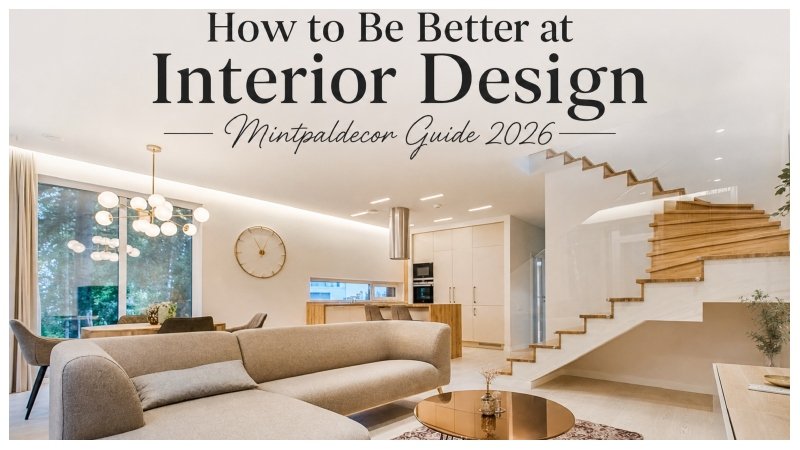
Interior design is not about filling a room with beautiful things. It’s about creating a space that feels natural, functional, and emotionally right. Many people decorate—but very few truly design. If you’re searching for how to be better at interior design mintpaldecor, you’re likely looking for more than basic tips. You want clarity, improvement, and results that actually show.
This guide will take you beyond surface-level advice and help you think like a real designer.
Why Most Interior Design Advice Fails
Let’s be honest—most articles repeat the same points:
- “Choose good colors”
- “Use lighting”
- “Add decor”
That’s not enough.
The real issue is this: people don’t understand why something works. Without that, every decision becomes guesswork.
Good design is not random. It follows logic, structure, and purpose.
Think Like a Designer, Not a Decorator
Before touching furniture or colors, shift your mindset.
A decorator asks: “How can I make this look nice?”
A designer asks: “How should this space function and feel?”
This small shift changes everything.
When learning how to be better at interior design mintpaldecor, your thinking matters more than your tools.
Start With Function, Not Aesthetics
A beautiful space that doesn’t work is a failure.
Ask These First:
- What is this room used for?
- Who will use it?
- What activities happen here daily?
Example:
A living room is not just for looks—it’s for comfort, conversation, and movement.
When function is clear, design decisions become easier and smarter.
Master Layout Before Buying Anything
Most beginners make the mistake of buying furniture first.
That’s backwards.
Key Layout Principles:
- Maintain clear walking paths (at least 30 inches)
- Avoid blocking natural movement
- Group furniture logically
- Don’t push everything against walls
Simple Insight:
A well-planned empty room is better than a poorly filled one.
This is one of the biggest upgrades you can make when improving how to be better at interior design mintpaldecor.
Use Color With Purpose, Not Emotion
Color is powerful—but also dangerous when used randomly.
Follow the 60-30-10 Rule:
- 60% dominant color
- 30% secondary color
- 10% accent
Go Deeper:
- Light shades expand space visually
- Dark tones create intimacy
- Neutral palettes provide flexibility
- Bold colors should be controlled, not dominant
Pro Tip:
Always test colors in real lighting before finalizing.
Color should support the space—not overwhelm it.
Lighting: The Detail That Changes Everything
Lighting is often ignored, yet it has the biggest impact.
Use Layered Lighting:
| Layer | Purpose |
|---|---|
| Ambient | Overall visibility |
| Task | Specific activities |
| Accent | Mood and visual interest |
What Most People Miss:
One ceiling light is never enough.
Combine multiple sources to create depth and atmosphere.
When done right, lighting alone can elevate your skills in how to be better at interior design mintpaldecor.
Textures Create the “Luxury Feel”
Even expensive rooms look dull without texture.
Combine:
- Soft materials (fabric, rugs, curtains)
- Hard surfaces (wood, metal, glass)
- Matte and glossy finishes
Why It Matters:
Texture adds dimension. Without it, everything feels flat.
A simple mix of materials can make a basic room feel high-end.
Create a Strong Focal Point
Every room needs one visual anchor.
Examples:
- A statement wall
- A large artwork
- A unique sofa
- A feature lighting piece
Without a focal point, the eye feels lost.
With one, the entire space feels intentional and balanced.
Declutter to Instantly Improve Any Space
No design works if the space is messy.
Simple Rules:
- Remove unnecessary items
- Keep surfaces clean
- Use hidden storage
Important Insight:
Clutter is not just physical—it’s visual stress.
Minimal, clean spaces always look more refined.
Add Personality Without Overdoing It
Many spaces look perfect—but feel empty.
That’s because they lack identity.
Add Personal Touches:
- Artwork that means something
- Books or collections
- Plants for life and freshness
- Unique decor pieces
Your space should feel like you, not a showroom.
Stop Copying Trends Blindly
Trends are useful—but risky.
Smart Approach:
- Take inspiration, not imitation
- Blend trends with your style
- Focus on long-term appeal
Reality Check:
What looks good online may not work in your space.
Timeless design always wins over temporary trends.
Common Mistakes That Ruin Design
Avoid these, and you’re already ahead of most people.
- Over decorating every corner
- Ignoring lighting layers
- Choosing style over comfort
- Using too many colors
- Buying furniture without planning
Fixing these alone can dramatically improve your results.
Practical Ways to Improve Your Skills
You don’t improve by reading—you improve by doing.
Start Practicing:
- Rearrange your current room
- Experiment with layouts
- Create mood boards
- Study real spaces and analyze them
Consistency builds instinct.
That’s how you truly grow in how to be better at interior design mintpaldecor.
Quick Design Evaluation Checklist
Before finalizing any room, check:
- Does the layout feel natural?
- Is there a clear focal point?
- Are colors balanced?
- Is lighting layered properly?
- Does the space feel clutter-free?
If something feels “off,” it probably is—trust that instinct.
Conclusion
Becoming better at interior design is not about copying ideas—it’s about understanding them.
To truly master how to be better at interior design mintpaldecor, focus on:
- Function before beauty
- Layout before decoration
- Balance in color and texture
- Smart use of lighting
- Personal expression
Start simple. Improve gradually. Stay consistent. Click here for more information.
Over time, your spaces won’t just look better—they’ll feel right, work better, and reflect real design thinking.